
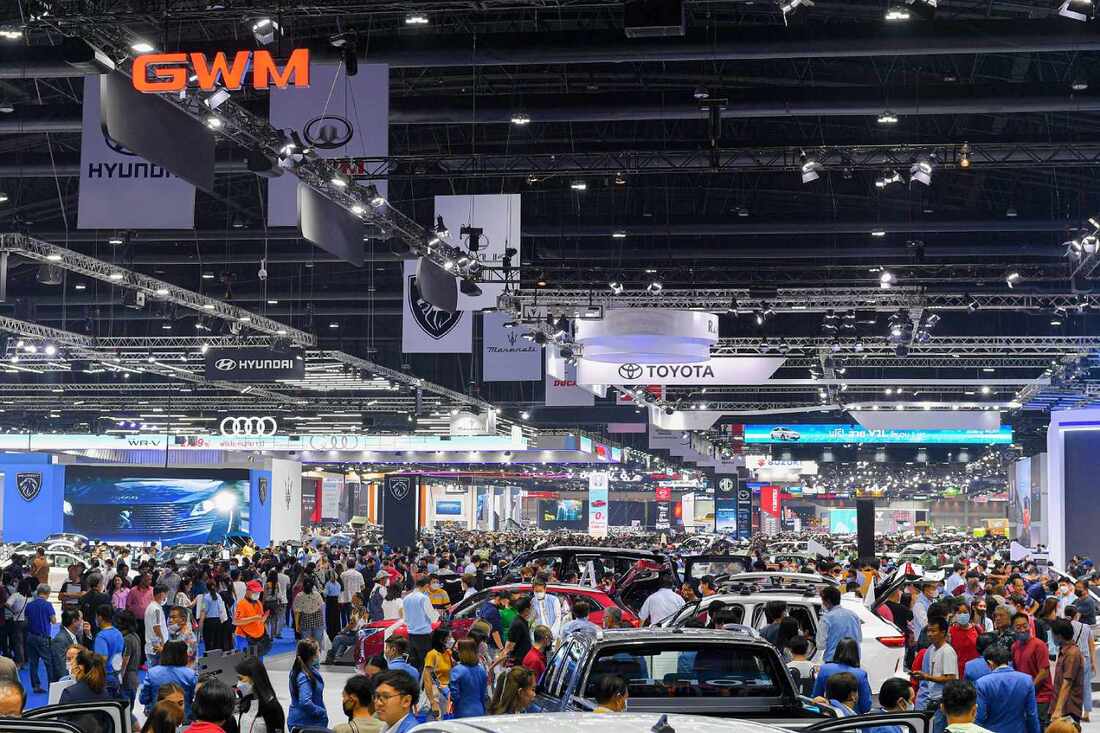
 The Bangkok International Motor Show 2024, running from March 27 to April 7, 2024, stands as a pivotal event within Thailand's automotive industry. As one of the country's two major auto exhibitions, its impact extends far beyond mere spectacle, with sales results often dictating the industry's trajectory for the year ahead. This year's show, marked by its significant Chinese representation, underscores a shifting dynamic in the global automotive landscape.
曼谷国际汽车展2024自3月27日至4月7日举办,是泰国汽车行业的重要事件之一。作为该国两大主要汽车展览之一,其影响力远不止于展示,销售结果往往决定了该行业未来一年的走向。今年的展会以显著的中国参与度为特点,凸显了全球汽车行业格局的转变。 Chinese participation has emerged as a focal point, capturing the attention of industry observers. Despite the traditional dominance of Japanese brands in the Thai market for nearly five decades, Chinese manufacturers have made notable strides, emerging as the second-largest participants at the event. The showcase of a diverse array of Chinese products, particularly in the realm of electric vehicles (EVs), reflects a concerted effort to establish a formidable presence in Southeast Asia's automotive arena. 中国的参与成为焦点,吸引了行业观察者的注意。尽管日本品牌在泰国市场长达近五十年的传统主导地位,但中国制造商已经取得了显著进展,在活动中成为第二大参与者。展示了多样化的中国产品,特别是在电动汽车领域,反映了建立强大的东南亚汽车市场存在着精心策划的努力。 Prominent Chinese brands such as GWM/Haval/Ora, Neta, AION, Changan Deepal, Avatr, Lumin, MG, and BYD have showcased their offerings, signaling a strategic push into the Thai market. Additionally, emerging brands like XPeng, Zeekr, Chery Omoda, and Jaecoo hint at a growing interest in establishing a foothold in the region. XPeng's comprehensive product display underscores the brand's commitment to the Thai market, offering a glimpse into the future of automotive innovation. 中国知名品牌如长城汽车/哈弗/欧拉、Neta、AION、长安达普、Avatr、Lumin、MG和比亚迪展示了他们的产品,暗示了他们对泰国市场的战略推进。此外,像小鹏汽车、Zeekr、奇瑞奥摩达和杰科等新兴品牌也表明了对在该地区建立立足点的兴趣。小鹏汽车全面展示的产品突显了该品牌对泰国市场的承诺,展示了汽车创新的未来。 Notably, GWM's unveiling of its POER pickup trucks highlights an intriguing development. With Thailand ranking as the world's second-largest pickup market, the absence of electric options from Chinese brands like GWM and MG presents a significant opportunity. Toyota and Isuzu's announcement of electric pickups slated for production in 2025 positions them as frontrunners in this emerging segment, potentially reshaping the competitive landscape. 值得注意的是,长城汽车展示其Poer皮卡,突显了一个有趣的发展趋势。由于泰国是世界第二大皮卡市场,长城汽车和MG等中国品牌未提供电动选项,这是一个重要的机会。丰田和五十铃宣布将于2025年投产电动皮卡,使它们成为这一新兴细分市场的领先者,可能重新塑造竞争格局。 Despite the dominance of Japanese giants in Thailand's pickup market, the emergence of Chinese passenger EVs and the prospect of Japanese electric pickups herald a transformative shift. While challenges exist, including the nascent electric pickup market in China, this presents an opportunity for Japanese manufacturers to capitalize on untapped potential. As the industry evolves, collaboration and innovation will be key drivers of success, paving the way for a dynamic and competitive automotive landscape in Thailand and beyond. 尽管日本巨头在泰国的皮卡市场占据主导地位,但中国乘用电动汽车的崛起和日本电动皮卡的前景预示着一场变革性的转变。尽管存在挑战,包括中国新兴的电动皮卡市场,但这为日本制造商提供了一个机会,可以利用尚未开发的潜力。随着行业的发展,合作和创新将是成功的关键驱动因素,为泰国乃至全球的汽车行业带来了一个充满活力和竞争力的新时代。 In conclusion, the Bangkok International Motor Show 2024 serves as a catalyst for industry evolution, highlighting the growing influence of Chinese manufacturers and the evolving preferences of consumers. By embracing innovation, fostering collaboration, and seizing emerging opportunities, stakeholders can propel the Thai automotive market into a new era of growth and prosperity. 总之,曼谷国际汽车展2024是行业演变的催化剂,突显了中国制造商的日益增长的影响力和消费者不断变化的偏好。通过拥抱创新,促进合作并抓住新兴机遇,利益相关者可以将泰国汽车市场推向增长和繁荣的新时代。
0 Comments
The Chinese EV market is currently under intense scrutiny, exemplified by the EU Commission's recent investigation into subsidized electric cars from China. This inquiry challenges conventional notions of dumping, as Chinese EVs in Europe are priced twice as high as in their home market, while European EVs in China cost half as much as in Europe. This raises the question: who is truly dumping?
Three key factors contribute to the competitiveness of Chinese EVs: China's control over the battery supply chain, the highly competitive domestic market fostering efficiency among automakers, and economies of scale, driven by China's position as the world's largest new energy vehicle market. With 77 automakers offering 129 brands and a staggering 820 vehicle models, the Chinese EV market dwarfs its European and US counterparts. Among these, 210 are battery electric vehicles (BEVs), showcasing the market's diversity and fierce competition. Notably, internal combustion engine (ICE) models are declining, from 570 in 2019 to 398, as foreign brands like Ford, Renault, and Mitsubishi exit. Despite challenges, such as limited home charging options for Chinese EV owners, the market continues its exponential growth. Even the termination of government subsidies has failed to deter buyers, with foreign investments pouring in, signaling confidence in the Chinese EV sector. Speculating on the EU Commission investigation's outcome, geopolitical factors might influence a conclusion unfavorable to Chinese businesses, akin to the trade restrictions seen in the US. This investigation adds another layer to the evolving dynamics of the global EV market, with potential implications for trade relations and industry competitiveness.  So far, all our discussions and explorations are based on the assumption that BEV is indeed the answer to future clean mobility. We base our assumption on several key factors:
There is no technology so far that can potentially outperform the BEV; All major automotive manufacturers have or are making major investments into electrification, most of them making do-or-die bets; we still staunching hold on to the belief that battery technology will continue to improve exponentially and that the energy density will go up significantly while at the same time costs will come down significantly as well; Governments all over the world have made commitments to BEV and phasing out the fossil fuel vehicles. What if - just what if - the BEV is not the answer? What if a new technology comes along within the next 5 years to challenge the BEV? What if the BEV production cost remains high, and that the price parity to the ICE cannot be achieved? What if, owing to geopolitical tensions, raw material sourcing for batteries become near impossible or prohibitively expensive, and that international conflicts result in a collapsing power grid which forces governments around the world to abandon the car electrification objectives? Some people have made references to the early automotive years where battery was the first power source before being replaced by the engine due to the limitations of the BEV. Could history repeat itself and the same thing happens again, where we are back to ICE and governments around the world take and wait-and-see approach for a better technology to come along? Such a question is of course very provocative, but in my opinion very unlikely to happen. There really is no other competing options to the BEV at this point of time. Even if there is a budding new technology now that shows signs of potentially challenging the BEV, the development process will take decades. On top of that, automotive production planning and design takes at least 5-10 years depending on the strengths and capabilities of the automaker, so the automotive manufacturers' commitments today will really only fully take shape in about a decade from now, so like a massive vessel, it does not change course in a split second. In fact, to change the course away from BEV today will take decades. Moreover, the battery technology is developing fast and more abundant minerals are being studied to hold charge and lighten both the weight and cost of the batteries. In any case, the ICE will still be around for quite some time, and during this period the ICE itself will go through a process of refinement and more efficient ICE drive trains will continue to be introduced, until such time where the BEV becomes mature and reaches price parity with the ICE and when the charging infrastructure reaches a level of adequacy then we shall see the gradual demise of the ICE vehicles.  BYD made a major announcement that has taken the market by surprise. It will stop producing pure ICE vehicles, and focus on BEVs and Hybrids. This is in contrast with the other major automakers who want to continue producing pure ICE vehicles together with EVs until such time that the EVs become mainstream and ICE vehicles are phased out. Which strategy is better? The earlier argument is that both ICE and EVs must make up the product range, as the ICEs are mostly profitable for the legacy automakers and the cash cows can fund the growth of EVs which is reckoned to take some time before turning over a profit. Hybrids serve as the transition to fully electric. So what has made BYD change its strategy? In reality, when we look closely at the pure ICE BYDs, the sales figures have dropped over the years, even though total BYD sales has soared. The engine that is in fact driving BYD's growth is the electric one (including HEVs and PHEVs). BYD reckons that the PHEV and EV sales would have been higher if not for cannibalization by it's own ICE vehicles. BYD also argues that the ICE is the cash cow that can fund EV's growth. Their financial analysis shows that the cost of maintaining 2 production lines in fact added costs that almost wiped out their ICE profits, therefore maintaining just one line for EV has significant savings that add to the bottomline. Of course, there is also the added reason that BYD's other main business is the supply and development of batteries. This makes it different from the other car makers. The Japanese automakers, on the other hand, and banking on a slower transition to electric. Honda, for instance, identified markets least likely to go electric soon, and put their resources. These markets fit the non-electric offers from Honda. With raw materials for battery getting scarce and costs escalating also due to supply chain issues, the Japanese auto manufacturers are putting their hopes on a slower route to electrification. In the first quarter of 2022, new energy vehicles were on the rise, and the global market penetration rate reached a new high. The sales outlook for the full year is buoyant and is expected to witness significant growth again, with market penetration in China likely to break 30%. There are two factors contributing to the high sales of new energy vehicles in the world, one is policy-driven, and the other is product-driven. 2022第一季度,新能源车来势汹汹,全球市场渗透率再创新高。全年销售展望欣欣向荣,预计会再见证大幅增长,中国市场渗透率可能会破30%。促成全球新能源车销量高涨的原因有两大因素,其一是政策驱动,其二是产品驱动。 Policy: According to the International Energy Agency's (IEA) Global Electric Vehicle Outlook 2021 policy, more than 20 countries have enacted full electrification schedules or promulgated bans on gasoline vehicles, and 8 countries plus the EU have announced carbon neutral commitment; In terms of products, almost all traditional auto giants have started electrification transformation and stepped up the launch of electric vehicle models. The global sales volume ranks among the TOP 20 vehicle companies (the total sales volume in 2020 will reach 90% of the global sales volume), of which 18 have announced its electrification strategy. 政策方面: 根据国际能源署(IEA)《全球电动汽车展望2021》政策方面,已有超过20个国家立法制定了全面电动化时间表或颁布了燃油汽车禁令,8个国家加上欧盟宣布了碳中和承诺;产品方面,几乎所有传统汽车巨头都开始电动化转型,加紧推出电动汽车车型,全球销量排名TOP20整车企业(2020年合计销量达全球销量90%),其中已有18家宣布了其电动化战略。 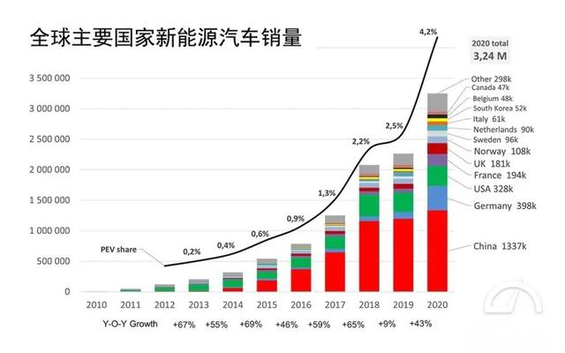 In terms of products: the optional models are abundant, and new models emerge in an endless stream. In the past, the bottlenecks of electrification, such as mileage anxiety, high car prices, and insufficient charging network, have all begun to be gradually improved. 产品方面: 可选车型丰富、新款车型层出不穷。以往的电动化瓶颈比如里程焦虑,居高不下的车价,充点网络的不足,都开始慢慢的完善。 In the Chinese market, electric vehicles mainly focus on the high-end market above 200,000 yuan and the low-end market below 100,000 yuan in the early stage of promotion. Electric cars are missing. With the introduction of mid-segment models by BYD, ORA, Nezha, etc., the market gap has gradually been filled. 中国市场上,电动汽车在推广初期主攻20万以上高端市场与10万以下低端市场,高端市场主打科技体验,低端市场主要是配合绿牌政策降低购车门槛,10-20万中端市场上电动汽车缺失。随着比亚迪、欧拉、哪吒等推出中段车型,市场空白逐渐被填补。 Recently, car companies have also turned their attention to the upgrade market for mobility scooters over 100,000 yuan. Great Wall Ora Cat and BYD Dolphin are positioned as young and fashionable, and are deeply loved by consumers. 近来,车企也把目光转向10万元以上代步小车升级市场,长城欧拉好猫、比亚迪海豚定位年轻时尚,深受消费者喜爱,销量持续攀升,欧拉好猫十月首次登榜。 The prospect of new energy vehicles is bright, but the embarrassing situation of low retention rate of electric vehicles still needs to be overcome. Some car owners directly said that they would not consider buying an electric car at all. 新能源车前景是光明的,但是电动车保值率低这个尴尬的情况还是需要克服的。有些车主直接说根本不会考虑买电动车. There are two reasons. First, they are worried about the cruising range. Second, the value preservation rate of new energy used cars is "horrible." Is the actual situation really what he said? 理由有两个,第一,担心续航里程,第二,新能源二手车保值率“惨不忍睹”。实际情况真的是如他所说的吗? Since this year, the second-hand price of electric vehicles seems to be showing signs of a sudden rebirth. There are two reasons for it to be popular now: one is the shortage of supply caused by the lack of cores, and the other is the consumer wailing behind the oil price. 从今年起,电动车二手价似乎有突然翻生的迹象,现在被热捧的原因有两个:一面是缺芯引发的供不应求,一面是油价背后的消费哀嚎。 In the past, consumers were worried that the battery decayed too fast. Thinking that once the battery is unusable, the car is equivalent to scrapping, but if the battery is replaced, the cost is extremely high, and consumers might as well buy a new car. 以前消费者担心的电池衰减速度过快,想想一旦电池不能用,车相当于报废了,但如果更换电池,成本又极高,消费者还不如买辆新车。 Battery technology has been greatly improved, and a battery that has been used for 10 years can still retain 80% of its storage function, which is no longer a reasonable reason for rejecting electric power. The only electric car used car price to overcome. 电池技术已经大大提升,开了10年的电池还能保存80%的储存功能,已经不是拒绝电动的的合理原因了。唯一需要克服的电动车二手车价。  Once electric vehicles become popular, the second-hand market transaction volume will naturally rise gradually. The rising tide of new car prices is unstoppable, and the price of second-hand car naturally rises with the tide. When consumers and used car dealers have more confidence in electric vehicles, the retention rate increases. 电动车一旦普及,二手市场成交量自然就会逐步攀升。新车涨价大潮势不可挡,二手车身价自然跟着水涨船高。当消费者和二手车商对电动车更有信心时,保值率会提高。 A second-hand car dealer observed and found that some electric vehicle brands with insufficient product strength are indeed not good at retaining their value, but the electric vehicle brands that have already come out such as Weilai, Ideal, Xiaopeng, and Tesla, the market has shown that they are not good enough. 一位二手车商观察发现,目前一些产品力不够好的电动车品牌保值率确实不行,但是蔚来、理想、小鹏、特斯拉这些已经跑出来的电动车品牌,市场已经表现出对他们的认可. Therefore, the value preservation rate is relatively good. The value preservation rate for one year is about 65%-70%, and the value preservation rate for three years is about 50%. Although the retention rate is not very high, it has been greatly improved compared to previous years. 所以保值率相对来说还是不错的,一年的保值率大概在65%-70%左右,三年的保值率在50%左右。尽管保值率也没有很高,但是相比于前几年已经有了很大的提升。 Buyers of second-hand electric vehicles have higher requirements on the EV than buyers of fuel vehicles. The reason is that the structure of electric vehicles is more delicate and the body is more delicate. A slight collision may affect the circuit, central control system, cameras, etc., so the car When inspecting and evaluating vehicles, dealers will be more careful and have higher requirements. 二手电动车买家对车身的要求相对来说比燃油车买家更高,理由是电动车的结构比较细腻,车身比较娇贵,稍微有碰撞可能会影响电路、中控系统、摄像头等,所以车商在检验评估车时,会更仔细,要求更高。 I’ll have an appointment with an agent for dinner two days later. In the used car business, I will encourage him to start focusing on electric vehicles. Now is the golden moment, after all, the competition is not so fierce. 过两天,我约了一位代理商吃饭,在二手车业务,我鼓励他开始着重于电动车,逐渐把焦点转移到电动车。现在是黄金时刻,毕竟竞争还没那么剧烈。 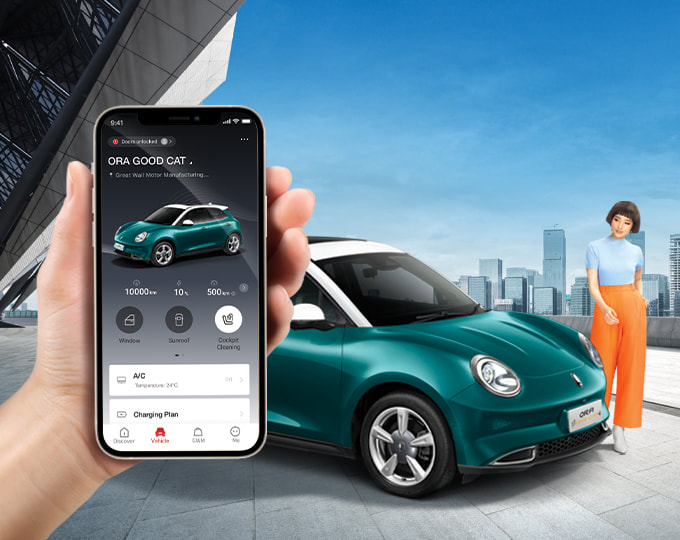 I believe it is good for us to, from time to time, take a few steps away from the action, and reflect a little on the overall development of the automotive industry, and to ponder on the macro aspects of the business, especially in the field of car electrification. Today, I would like to talk about 4 major changes that are affecting the automotive industry as a result of electrification. Firstly, there is now a major divide between the traditional automotive powerhouses, and the new players. The traditional players tend to have a long history and has acquired decades of experience that are difficult to duplicate. However, due to electrification, some of these strengths may not be able to be carried into the future. Take for instance the strengths in power train. As the electric motor replaces the engine and transmissions, the decades of accumulated experience in transmissions loses its value. Had it not been the case, it would be very difficult for new players to come in as gear transmission design and manufacturing is a complicated business and the entry barrier would be very high. However, when the electric motor replaces the traditional power trains, the opportunity for new players to come in is presented. These new players shift the focus from beefing up the muscle of the power train to the software part of the customer experience (rightly so, as the electric motor itself is more efficient and powerful than the engine so there is no need to brag about power anymore). Secondly, the mix of skills and talent in auto production has also changed. Traditional car manufacturing plants start to see a higher mix of software engineers and fewer mechanical engineers. NIO said in an interview that more than half of their engineers in the production department comprises of software engineers. This is very different from the traditional car manufacturing process where the focus is on the mechanical side, to ensure safety, comfort, ease of operation and durability. Thirdly, as the mix of software engineers gets higher and higher over time, there is more and more female participation in the workforce. This is a major change in the workforce composition, because the automotive industry is traditionally very male dominated. In the past, due to the focus on the mechanical aspects of design and production, the industry attracts males and deter women from joining. Fourthly, I predict that Japanese brands will start to lose their dominance, especially in Asia where they are currently still very dominant. Take for instance in Thailand, Japanese brands make up 90% of all new car sales. This is about to change, as we see more and more Chinese news coming into the market (MG, and now GWM/Haval/Ora). More and more Chinese brands will come into the market as electrification becomes more widespread. Other than Chinese brands, new players like Tesla is growing in market share too. Thus, in the longer term, Japanese brands will lose market share as they struggle with electrification. All these major changes in the industry presents both risks and opportunities.  Great Wall Motor (GWM), through the acquisition of the General Motors/Chevrolet production plant in Rayong, Thailand, embarked on production in Thailand and then using Thailand as the base to reach out to the rest of Southeast Asia and beyond. This GWM factory is their first outside of China and for sure they have great plans and hopes for the growth of GWM in this region. They plan to do this through innovative ways of sales and marketing. One of the first unique introductions to the Thai market, and possible beyond later, is their new and innovative way of network development. Unlike the traditional way of having the dealer network serve as the proxy for the OEM, by reaching out to the end customers and to try to keep them, GWM's direct sales method means that they play a very active role in the prospecting of customers and then to own the customers. Dealers have been "relegated" to being just order takers and service providers. This extends to after-sales services even, and all the customer database is in the hands of GWM. I think this is the future trend and other brands are likely to follow. Mercedes Benz has introduced such direct sales method too in other markets as trial and will roll out to the rest of the market when they are confident of the model. Dealers do not even need to manage vehicle stocks, they are all under one roof managed by Mercedes Benz (and this is the same model for GWM), so dealers become more like brokers instead. The other fundamental change is the skills requirement in the dealership. Many studies have shown that the vast majority of dealers are still not ready to sell EVs. To be equipped with the basic knowledge of EVs for sales and service activities, dealership personnel will need to know about the basics of electrical engineering, at least to understand different types of motors, inverters, on-board off-board chargers, EVSEs, batteries, and to have a basic understanding of words like voltage, resistance, current in ampheres, wattage, AC DC current, current conversion, and the safety issues related to handling EVs and charger installation. Though not likely to become prevalent anytime soon, dealers should still start to traing their staff for basic understanding of even things like induction charging. These are new skills and knowledge that dealerships need to quickly acquire to have a greater impact on promoting electric vehicles. Dealer staff will also need to be able to liaise with car makers on issues related to software and future upgrading (usually OTA nowadays), and cybersecurity issues. As the technology of EVs progresses, dealerships will need to be able to pick up skills and knowledge to sell and service self-driving cars, GWM already offers level 2 autonomous driving in the Ora good cats now, and they plan to elevate self driving technology further in the next 2-3 years. If the dealers do not start to build the knowledge and skills inhouse NOW, they may have no time to react in the near future.  There has been a lot of reports and media attention on Toyota's very open resistance to car electrification. This comes as a surprise to many and shock to others because Toyota has long been the pioneer of clean energy cars with their first hybrid car Prius and their dominance in ICE and Hybrid vehicles sales worldwide. Toyota is also the first to commercially launch hydrogen fuel cell car with the Mirai. Despite having the early lead in clean energy vehicles, Toyota currently does not sell any electric vehicles in major markets outside China, while its competitors have been pouring resources into developing EVs and preparing for the end of ICE vehicles. However, Toyota has said that it plans to sell 15 battery-electric models globally by 2025, part of a wider lineup of 70 battery-electric, hybrid and hydrogen fuel cell vehicles to offer “diverse choices” to buyers. On 14 December 2021, Toyota announced that it plans to invest $35 billion into battery-powered EVs and roll out 30 models by 2030. Prior to this, Toyota announced that it will invest approximately $3.4 billion (380 billion yen) in automotive batteries in the United States through 2030. The venture will first focus on producing batteries for hybrid electric vehicles. Toyota has said that it plans 15 additional battery electric models, including seven different Toyota bZ (Beyond Zero) models, by 2025. Two of those bZ models—the bZ4X crossover, followed by an electric sedan—are due to bow by the end of the 2021 calendar year. One of the others will be an electric pickup. In its first EV market, Toyota's three electric models are the battery-electric versions of the sister models C-HR and IZOA, which were introduced in 2020 and are built by Toyota’s joint ventures with GAC and FAW, as well as the Lexus UX 300e. The Toyota bZ4X, the first electric vehicle under the automaker's new bZ brand, will come to the U.S. in mid-2022. Being the world's biggest auto manufacturer, and for a long time the leader of clean energy vehicles and the most valuable car company in the world, why is Toyota losing ground for electrification? There are several reasons. Firstly, Toyota has invested heavily in hybrid technology and they want to recoup the investment first before moving to fully electric. That is why Toyota has consistently argued for hybrid technology saying that it s better than full EV as it overcomes range anxiety, has efficiency almost as high as full EV (well...) and that EV's are not that green after all. Secondly, Toyota believes that electrification can only be commercially viable in 10 years or more. Hence, it is in no hurry to electrify its cars. It is betting on denser batteries like solid state batteries and hoping to turn the tables against the current EV leaders. Toyota is also hoping for breakthroughs in fuel cell technology so that it can be the first mover. Thirdly, Japan has infrastructure limitations to expanding the grid. Unlike China which imports 30% of energy needs, Japan imports 96% in 2020! After Fukushima, Nuclear energy dependence is significantly reduced, and oil and natural gas became the substitutes. Therefore, it may be a politically motivated move for Toyota and Japan as a while to resist electrification. Fourthly, despite Covid chip shortages, Toyota's market share in China and worldwide remains strong, so there is very little motivation for change. Think Kodak...Toyota, like other Japanese corporations, have very close relationships with their suppliers, even to the extent of cross ownerships, that results in resistance to change as it would impact manufacturer-supplier relationships. Fifthly, electrification necessitates massive internal restructuring, change in mindsets, new thinking and innovation, which is never the strength of Japanese corporations. Like Germany, Japan has the propensity to seek perfection, so they do well in tasks for continuous improvements (Kaizen), not revolutionary changes with great uncertainty and imperfect information. Success is not always a good thing. For Toyota and the Kodaks of the world, when you are the clear leader and raking in good profits, it is very difficult to convince yourself and your team to change, to make short term sacrifices, for a long term goal which you may not even be there to enjoy the success when attained. Moreover, I really think there is still a lot of skepticism on electrification in Toyota's power corridors. 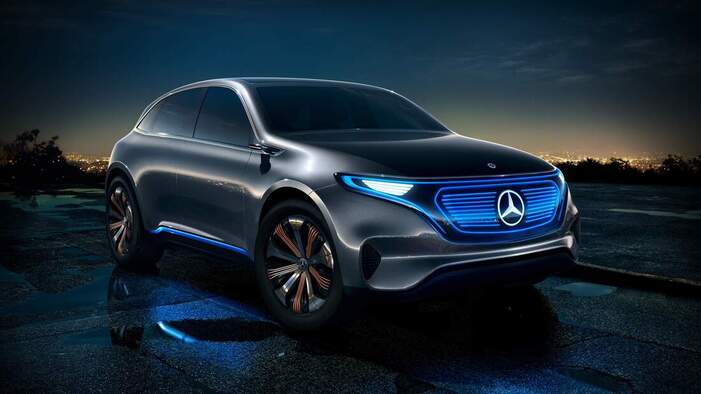 I read with interest the new retail concept of Mercedes Benz called Retail of the Future, now in its pilot stage in several markets. If proven to work well in the test markets, this new structure will be introduced gradually in the rest of the territories. So what exactly is Retail of the Future? The details are still sketchy, but it essentially means that Mercedes Benz will sell directly to the customers, with the dealers relegated to "Franchise Partners" whose main role is to provide after sales service. Mercedes Benz cited several reasons for doing this. Firstly, the company said that new car sales profitability is always a roller coaster depending on seasonal factors, age of the models, production schedule and so on. After-sales or fixed ops as it is called in US is more stable. Therefore, Mercedes Benz argued that this new format is good for the dealers because it takes out the instability of profits over time. Secondly, Mercedes Benz argued, retail cost can be reduced since dealership stock carrying cost is minimized. Presently, 10 dealers within close proximity of each other may be forced to display say 3 colours of the same model, but with the new sales format, MB carries the inventory in their so-called central repository, and the cost savings can be passed on to the customers. Thirdly, with the growing need for touchless service, the role of showrooms have been reduced. More online activities are expected to take place as the new normal, and online services are better served by MB in a centralized manner. Fourthly, as cars moved towards electrification, MB argues that current dealers are not yet adequately equipped to serve the customers, so MB can apply their expertise for their customers. New sales presentation requires deep understanding of touchscreens and software, energy computations (watts, kilowatts, voltage, current, resistance, types of motors, AC/DC, brush or brushless, permanent magnet or not, types of batteries, cylindrical, pouch, prismatic, blade etc, EVSE types, cables, current, power tariff etc). The expertise on ICE power train becomes obsolete. So how does EV play a role in the change? Well, because consumers and potential car buyers do not know the new EV players, these new players have to introduce their products and have the customers experience the EVs, play with the features, understand the cars better, drive them to build confidence, and you cannot do this with the dealership format. For the dealership format, the customers walk into the showrooms after doing their homework, and usually already have adequate experience with the cars they intend to buy. The new concept introduced by the new EV players is called the experiential centre, designed to be family friendly, a place to drop by while shopping, to linger, to try, to test, and to relax. The atmosphere is different from a typical showroom which is often highly pressurized, with a lot of wheeling and dealing, hard negotiation, going on. The confidence in the format without dealerships is further boosted by the success of the brands which have done away with dealerships, Tesla being a good example. Are we seeing a future landscape with dealerships being just a place for customer service support? Please feel free to drop your comments 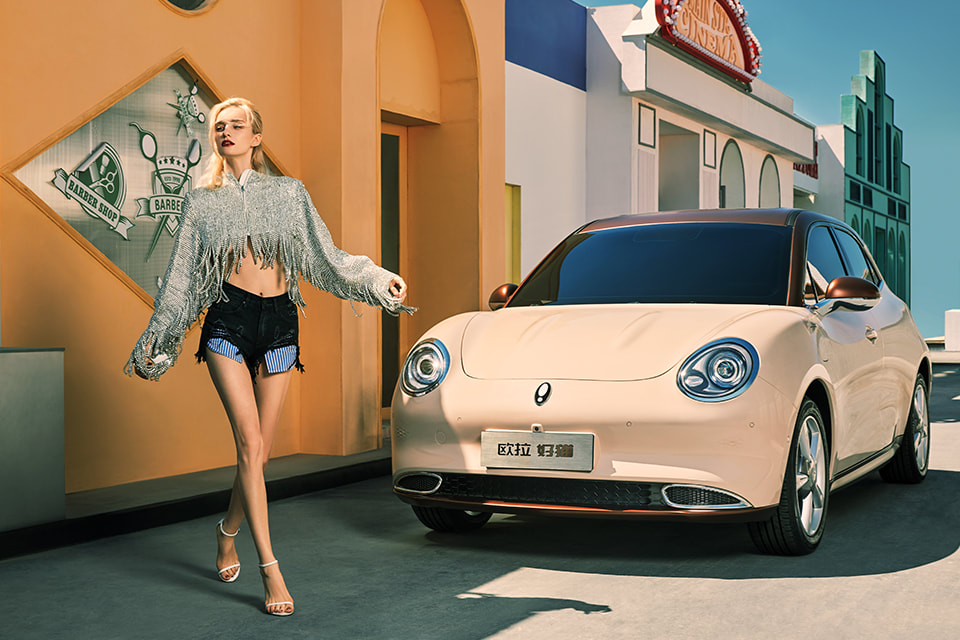 In line with GWM's strategic plan, The Ora Good Cat EV has been officially launched in Thailand on 29 October 2021. Thailand is the entry point for GWM's growth plan for Southeast Asia and, following the success of Ora which garnered more than 1000 orders in 2 weeks, The Black Cat EV is poised to enter Thailand before the end of the year.
This launch is interesting because it is the first time I have witnessed a fully online product launch event and the amount of technology applied is simply eye catching. The theme for the online launch event is "Future Ready", during which 3 models were introduced, namely the 400 Tech, 400 Pro and 500 Ultra. The prices ranged from THB989,000 to THB1,199,000. Through the proprietary Ora Smart technology, GWM has packaged Ora with lots of technology including AI, facial recognition, sensors and cameras to reach L2 driving, and a distance range of up to 500km based on NEDC. GWM has promised Thai customers new energy driving and smart car technology. Of the current 19 sales outlets throughout Thailand, 9 are GWM-owned experiential centers, and the others are independent dealerships. GWM plans to expand the network to 35 before the end of next year. Many new dealers have been attracted by the success of the Haval 6 HEV since its launch in June this year. GWM places a lot of importance on the success of Haval and Ora in Thailand as it is the first time that GWM has ventured abroad and set up production facilities, so it must succeed, there is no other alternative. GWM's other planned production overseas in India has been put on hold due to political reasons. Early this year 2021, a deadly car crash in Singapore resulted in widespread media attention and discussion. 5 young men were racing in the early hours of the morning in the narrow streets of an older part of Singapore. All died tragically in the crash. The saddest part was that the girlfriend of one of the dead men went to the burning car and tried to save her boyfriend. Without the fire, the men would have been dead anyway, but why was the car engulfed in flames which eventually caused severe burns to the girl trying to extricate her boyfriend from the car? How causes car fires? For the internal combustion engine cars, there is fuel flowing through many parts of the car. The fuel tank is usually located at the back of the car, and the fuel has to be transported to the front into the engine, passing through various channels. Fuel is carried via these channels through hoses and casings, which have valves, rubber hoses, various types of clips, bolts and nuts and so on, all of which are subjected to ageing and deterioration, or even defects due to lack of proper maintenance. However, sometimes, fuel leaks can be due to manufacturing defects. Fuel is highly flammable (that's why it is used for the combustion), and when leaked, a small spark can result in fires. Hence, wherever the fuel may pass through, there is a chance of fire. The spark can come from heat, electrical short circuit, or even from external environment (never park the vehicle near flammable items). Fuel is not the only cause of car fires. Oil can also start a fire. All oil in the car including transmission fluid, brake fluid, radiator coolant, and power steering fluid circulating throughout their respective systems when a vehicle is running can cause fires. However, fuel is the most dangerous because it is highly flammable. Other than fuel and oil, gases can also ignite. For instance, battery charging can result in gas being released, which can lead to fire when ignited. Likewise, storage of fuel also results in gases which can also ignite. Ok, having explained all these, now let's compare with the electric car. There is no engine. No fuel. Less oil. No combustion operation that causes fires. So EV is much safer than ICE in terms of possibility of fire? Well, yes and no. In the EV, the cause of fire will invariably be from BATTERIES. There is little chance of the motor catching fire. Hence, when battery technology reaches a very high level of fire resistance, we can say goodbye to car fires. To me and all EV supporters, this is great news.   Overview Over a million companies benefit from a quality management system certified according to ISO 9001, enjoying peak process performance and an international competitive advantage. ISO 9001 certification ensures that quality orientation is lived by each of your employees every day. ISO 9001 Quality Management System is a tool to improve your organization quality performance and customer satisfaction. To establish effective quality management in your company, we take into account your specific requirements and perspectives. The standard also requires a control loop, which involves constant internal re-evaluation of the system, promoting a continuous improvement process (CIP). With its process-based and risk-based thinking approach, a quality management system according to ISO 9001 is suitable for all industries and companies – from start-ups to global corporations. Join Our Webinar Date Friday, 24 September 2021 Time 09.30 AM – 12.30 PM Platform Zoom Agenda • Basic Concept of Quality • Basic Concept of Quality Management System • Continual Improvement through Quality Management System • ISO9001:2015 Requirements Overview and it’s Implementation in VIS and AW • Q&A Session (15 minutes) Presented by: Mr. Zidky Yacob – Lead Trainer PT TUV Rheinland Indonesia Moderated by: Mr. Jeffrey Low – Automotive Industry Expert International Biz Net Sdn Bhd Someone read my previous article “Let’s talk about batteries” hoping to learn something about batteries, I mean, the fundamentals of batteries. Instead, he was to complain to me, all he learnt was about 2 battery makers namely CATL and BYD and how they compete against each other for a bigger slice of the pie and how they become so wealthy from batteries. I told him that, despite his misgivings about the article, most people who asked me about batteries are not interested in the technical part of it, but more interested in knowing about the key suppliers, and how prices will be driven down further from the competition. They also want to know enough for their EV purchase consideration and to make sure they make the right decisions for their mobility needs.
Well, we are not calling anyone pedantic (certainly NOT!), we can talk about batteries from a more technical perspective, and to share and exchange knowledge with each other if you may, hence today’s article. Batteries are highly important in promoting alternative energy, because without the ability to store energy, most of the energy produced can go to waste. Take for instance, solar energy. Without the battery, you can only use solar energy in the day, and only when the sun shines, and hopefully it does not rain…On top of that, most of the solar energy produced goes to waste unless it is immediate consumed. Battery technology has not changed much in the last 100 years. As I told you before, I used to sell lead acid batteries for a few years, for both motive and stationary power. Motive power refers to power for mobility, so it is used in cars, forklifts, and so on. Stationary power is used for non-mobility purposes, such as your uninterrupted power supply (UPS), even to power the telecom base stations. For motive power, I sold car starter batteries (all types, flooded, AGM, Gel, start-stop etc), deep-cycle batteries, traction batteries. As I said earlier, the technology has remained very stable for decades, unchanged, with innovation mainly in recycling. Batteries for EVs are different, as EVs require much more powerful batteries. Such batteries have also evolved over time, with the Lithium Ion now being the most widely used. These EV batteries are basically many mobile phone batteries put together to generate more power. Hence, all the issues one encounters with phone batteries apply to EV batteries, though EV batteries have more issues, as there is also battery management system, and protection to prevent explosion from collision, and so on. Is there any difference between the way lead acid batteries and lithium ion batteries work? The principle is the same, which is the movement of electrons for storage and power release. The main difference between the types of batteries is the material for the electrodes (cathodes and anodes), and the electrolytes. There can be some technological advancements in separators but this is not the most critical component. So battery makers try to develop and enhance batteries by finding material that can help to:
Thus, the continual search for material that can fulfill the above 5 requirements. Lithium ion used to be ideal until the demand soars, and the world soon finds out that supply is limited, and so demand forces drive up costs, so now lithium is getting more and more expensive, and soon it may no longer be commercially viable. Remember, EV makers also have to make sure that EV cost becomes very competitive to internal combustion (ICE) cars. So, CATL is researching sodium batteries, why? Because sodium is so abundant and cheap. BYD’s blade batteries try to overcome the problem if explosion, but it is expensive to make. Traditional automakers like VW and Toyota are exploring solid state batteries where the electrolyte is not liquid but is solid, hence more compact, non-explosive due to no thermal run away, and potentially more energy dense. E-waste will become a serious issue if lithium ion batteries continue to be expensive to recycle. Note that one of the main reasons why the lead acid batteries can be commercially viable for so long is because 95% of it is recycled. I told my friend, now that you are armed with the basic knowledge of batteries, you can judge for yourself which battery maker has brighter prospects, and hence higher market value in the near future. He can also decide for himself whether battery leasing is a viable business in the next 5 years. One has to bear in mind that battery costs today is 10% of what it used to be just a decade ago. Had it not been so, Tesla would have been history, imagine that! Finally, he can decide whether his next car should be an EV! In the previous article, I commented that had BYD focused on batteries, they would have been valued higher today. Let’s talk a little about the market leader for batteries, CATL. This is a company that adopted a different strategy to BYD. CATL focused sole on batteries. It is the biggest battery supplier today. The founder of the company is the richest man in Hong Kong (he became a HK resident and citizen), overtaking Li Ka Shing. The company CATL was only listed in 2018, so it is a very young listed company, however, since then the share price has increased 160 times. This means that, if you had invested US$100,000 in the company in 2018, you can cash out for US$16 million today! Now compare that to BYD, which is worth 32 times more than when it first listed in 2008 (which, by the way, is itself a remarkable achievement), that is why some have argued that BYD would have been worth so much more had it focused on batteries.
CATL, including the years before it became CATL, actually has a long history. It started in 1998. However, over the years it focused on batteries even at times when this laser sharp focus was being tested tremendously. Together with LG Chem, Panasonic and BYD, they control 80% of world EV battery supplies. This stronghold is being challenged now that car OEMs are starting to invest in battery production as well, the most notable being Tesla. Others planning to product batteries include Mercedes Benz, BMW, and VW. On top of that, battery technology is always evolving and so CATL has to continue to stay ahead of the competition and invest heavily in R&D. The product has to continually evolve, to have greater energy density, to be non explosive, to be cheaper, to allow for faster charging without accelerating battery deterioration, the increase charging cycles, to reduce in size and weight. Yes, customers want all that, and it will take a lot of skills, expertise, resolve, perseverance, to attain these goals. As mentioned in the previous article, BYD is challenging CATL today with the blade batteries. As the founder of BYD said, the blade battery can make the battery explosion a thing of the past (刀片电池会让电车自然这几个字从字典里消失). In recent articles, it seems that CATL is also developing non-explosive batteries to challenge BYD’s. The most interesting development which CATL announced is the sodium battery aiming to replace lithium, which is becoming more and more expensive due to demand and supply forces. LG Chem’s problems in GM Bolt have also given BYD the edge over the Korean battery makers as the world gradually turns away from the Korean suppliers. There are also more and more new entrants to the battery market but in the short to medium term, these small players are very unlikely to challenge the very entrenched positions of the big 4, namely CATL, LG Chem, Panasonic and BYD. Many car OEMs have no reservations about using CATL batteries as compare to BYD’s, as I mentioned in the previous article, because CATL focuses on batteries and they do not produce EVs, so CATL is not a competitor in any sense of the word. That is why many stock analysts believe that, in spite of the 160 times share price increase in the last 3 years, the share price is CATL is still expected to increase 3 fold in the next 2 to 3 years, as demand of batteries surges due to the EV productions worldwide. The future challenges to CATL will be potentially new and revolutionary battery technology in the hands of competitors (solid state batteries, possibly?), politically reasons as rivals may attack them for their close relations with the current president of China, or BEVs losing the race to FCEVs (which is very unlikely in my view). Many of us know that Warren Buffett invested in BYD way back in 2008 at a time when even the most optimistic of EV proponents had not in their wildest dreams thought that New EV automakers would one day have market values much greater than the well established brands like GM, Ford, even Toyota. With the benefit of hindsight, we know that his investment had increased 32 times since, and we would probably be thinking on his behalf that perhaps he should have invested more than the 10%.
However, compared to its peers, BYD’s share price actually hadn’t done as well. As such, many, albeit with the benefit of hindsight again, raised questions about BYD’s strategy and asked if they should have done better if only they had focused on just making batteries instead of spreading their resources so thinly across so many product types. For those not yet in the know, BYD makes a lot of things other than batteries. They also produce cars (ICE, hybrids and EVs), electronics, phone component parts, and when COVID struck, they even produced masks. Compared to CATL which makes only batteries, BYD’s market valuation is much lower. This could be hard fact for BYD to swallow as they are the pioneers of car batteries. It makes me wonder, if BYD had stuck to just batteries, would they be the undisputed number 1 today? The reality is that today, BYD is only number 3 in China for batteries. Though holding the status of being the first in China to venture into EV production, today they are still not the number 1 in China. Matter of fact, BYD started researching batteries 26 years ago and produced their first EV, months before Tesla even rolled out their first vehicle. BYD has struck back with a vengeance recently with the introduction of the blade batteries, to rival CATL’s claim to non-explosion batteries. Indeed, the blade batteries are truly revolutionary and is a strong testament of BYD’s strong battery expertise. However, when compared to CATL, BYD does have a disadvantage when it comes to selling batteries to other car manufacturers. You see, car brands have no problems buying batteries from CATL or LG Chen or Panasonic, because these brands do not produce their own brands of cars, whereas BYD has how car brand and so car maker would be supporting a competitor if it buys BYD batteries. What BYD has done very well is in the promotion of their electric commercial vehicles especially buses. It has a worldwide acceptance. To me, this is a very clever move, because the typical reasons holding back EV car buyers do not apply to the commercial fleets, especially government-run public transportation. There is not issue about range anxiety (public buses run on specific routes), second hand value (note that in Singapore BYD buses are expected to run for 17+3 years until the end of its useful life), payback period since the high mileage means that investment is recovered quickly. I have a lot of respect for BYD, especially their persistence and perseverance, from the days when everyone doubts their ability to survive, when everyone doubts their vision of an EV future. When it comes to exports, BYD share the international market essentially with only 2 other Chinese EV makers namely MG/SAIC and GWM/Haval. The rest of the EVs offered outside of China come from the traditional car makers from Europe and a few from USA. Of late, BYD has entered into strategic partnerships with well known car companies, for example Mercedes Benz, and that should pave the way for BYD to further strengthen their position in the EV battery market in the near future. |
Local knowledge, regional expertise, global reach Brunei | Qatar | Singapore
|
IBN on Net |
